
Scotland has a compact, high-quality rail network that makes it easy to link the country's four main cities in a single loop. Edinburgh, Glasgow, Inverness, and Aberdeen are all connected by ScotRail, with the Highland Main Line delivering one of the most spectacular rail journeys in Europe as it crosses Rannoch Moor and the Cairngorms. The Caledonian Sleeper brings you overnight from London to start the circle — or take it north direct to Inverness and work your way back south.
ScotRail highland circle — the route
The natural circuit runs Edinburgh → Glasgow → Inverness → Aberdeen → Edinburgh, and covers four very different cities in around 8–10 days:
- - Edinburgh → Glasgow Queen Street: 50 min, every 15–30 min
- - Glasgow → Inverness: 3h15, several per day via Perth and Aviemore
- - Inverness → Aberdeen: 2h15, roughly hourly
- - Aberdeen → Edinburgh: 2h30, roughly hourly
All routes are operated by ScotRail. Interrail and Eurail Global Passes are valid throughout.
Edinburgh
Edinburgh Waverley sits in a valley beneath the castle — one of the most dramatic station settings in Europe. The city divides into two distinct halves.
Old Town — the Royal Mile runs from Edinburgh Castle down to the Palace of Holyroodhouse through a dense medieval streetscape of closes and wynds. Arthur's Seat (an extinct volcano) dominates the skyline east of the palace and takes about an hour to summit.
New Town — Georgian grid built in the 18th century. Princes Street, Charlotte Square, and the Scottish National Gallery. The Scottish National Portrait Gallery (free) is one of the finest portrait collections in Britain.
Whisky: The Scotch Whisky Experience on the Royal Mile and a half-dozen independent whisky shops make Edinburgh the best single introduction to Scotch. Leith (20 min by tram from the centre) has newer distilleries including the Scotch Malt Whisky Society.
2–3 nights recommended.
Glasgow
Scotland's largest city and cultural engine. Glasgow's reputation for architectural grandeur and reinvention is well-earned — Charles Rennie Mackintosh's buildings alone justify a half-day of exploration.
Kelvingrove Art Gallery & Museum (free) — one of Scotland's most-visited attractions, with a breadth that runs from Salvador Dalí to a Spitfire hanging from the ceiling. Located in the West End, 15 minutes' walk from Glasgow Queen Street.
Mackintosh at the Willow — the restored Sauchiehall Street tearooms, Mackintosh's finest surviving interior. The Mackintosh House (inside the Hunterian Museum) and the Glasgow School of Art (tours run regularly) are equally worth your time.
The Merchant City — the original trade district east of the city centre, now Glasgow's most concentrated stretch of restaurants, bars, and independent shops.
1–2 nights.
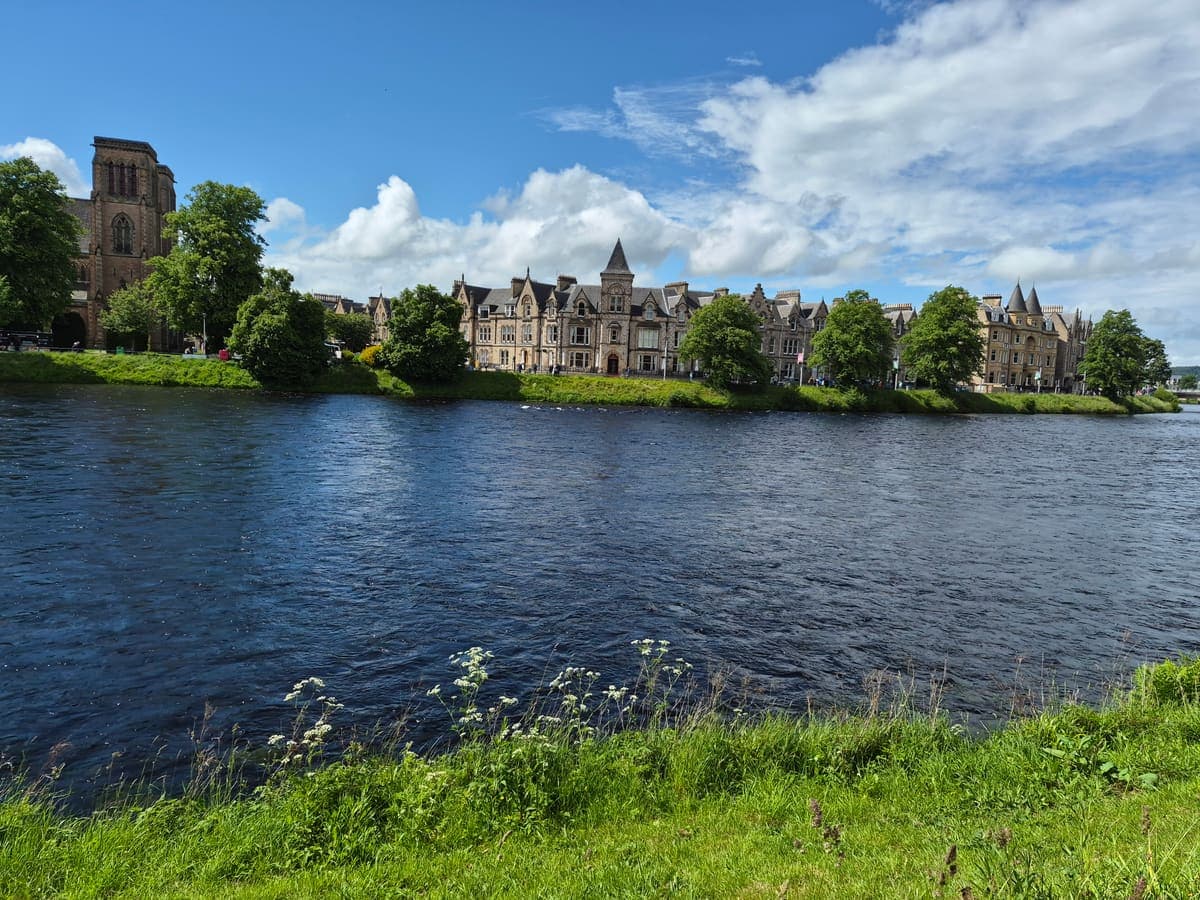
Inverness & the Highlands
Inverness is the Highland capital and the gateway to the most dramatic scenery in Scotland. The station is five minutes from the city centre.
Loch Ness — 45 minutes by bus from Inverness. Urquhart Castle on the western shore is the main stopping point; Jacobite Cruises run year-round from Drumnadrochit. The loch is 37 km long, 230 m deep, and contains more water than all the lakes of England and Wales combined.
Culloden Moor (6 km east) — the site of the 1746 battle that ended the Jacobite rising. The National Trust visitor centre is genuinely affecting; the battlefield is well-signed and atmospheric year-round.
Cairngorms National Park — accessible from Aviemore (45 min south by train). Britain's largest national park, with mountain biking, winter skiing, red squirrels, and the Strathspey Railway steam service.
2 nights recommended.
Aberdeen
Known as the Granite City for its silver-grey skyline, Aberdeen is the commercial hub of northeast Scotland and the departure point for one of Scotland's finest castle day trips.
Dunnottar Castle (15 km south, bus or taxi) — a spectacular ruined fortress perched on a sea cliff above the North Sea. One of the most photographed castles in Scotland; allow 30 minutes to explore plus walking time from the car park.
Aberdeen Maritime Museum (free) — traces the story of the North Sea oil industry, fishing heritage, and 500 years of shipbuilding.
Union Street — the granite-built commercial spine of the city, with independent shops and a covered Victorian market. Aberdeen's granite buildings take on a remarkable silver shimmer in low sunlight.
1 night before returning to Edinburgh.
Getting there: Caledonian Sleeper
The Caledonian Sleeper departs London Euston every night and is the finest way to arrive in Scotland:
- - London → Edinburgh: ~7h, departs ~21:30, arrives ~07:00
- - London → Glasgow Central: ~7h, departs ~23:45, arrives ~07:00
- - London → Inverness: ~11h, departs ~20:45, arrives ~08:45
All cabins include en-suite shower and toilet — the finest sleeping cars in the UK. Book 2–3 months ahead in summer; sleeper berths sell out quickly. Interrail/Eurail passes are valid; a mandatory supplement of approximately £29–40 per berth per night applies.
Practical tips
Passes: Interrail and Eurail Global Passes cover all ScotRail and National Rail services in Scotland. No mandatory reservations on most ScotRail journeys — just board with your pass validated. The Caledonian Sleeper requires a separate sleeper supplement.
ScotRail app: Best for live departures and ad-hoc tickets. ScotRail Day Rangers offer unlimited travel in a region for around £15–25 — useful for day trips from Inverness to the Cairngorms.
Climate: Scotland's weather is famously changeable. Pack layers regardless of season. June–August is warmest but busiest. May and September offer fewer crowds with similar daylight.
West Highland Line (not on this circuit but worth adding): Glasgow → Fort William → Mallaig is widely considered one of the greatest rail journeys in the world — the Glenfinnan Viaduct, Loch Shiel, and the Jacobite steam train in summer.
Plan your Scottish Highland circuit
EuroTrekker builds your Scotland itinerary with ScotRail connections from Edinburgh through Glasgow, Inverness, and Aberdeen — returning to where you started.